The broken promise
"Get a degree and you'll be fine" doesn't work anymore
A degree helps, but it no longer replaces visible skills, projects, network, and judgment.
By the end, you'll see why the old advice feels comforting, why it fails now, and what a student actually has to build.
The sentence used to sound like safety.
Get a degree and you'll be fine.
Parents said it because it worked for many of them. Teachers said it because school was built around it. Students believed it because the alternative was scarier.
So you did the work.
You attended class. Submitted assignments. Studied for exams. Built the résumé. Waited for the system to reward you for following the path.
Then graduation got closer and the old sentence started sounding less like a promise.
More like a prayer.
The hard update
“A degree still opens doors, but it no longer proves you can walk through them.”
The mistake is not believing college matters.
College still matters.
The mistake is believing college can carry the whole weight by itself.
That was the old bargain: finish school, show the credential, wait for employers to translate it into trust.
The new bargain is harsher.
The credential gets you considered. Proof gets you believed.
How the old promise broke
More people got the credential
A degree became less rare, so it stopped separating candidates by itself.
Work became more visible
Employers can now see projects, portfolios, writing, code, posts, case studies, and public proof.
Entry-level work changed
Many junior tasks are now automated, outsourced, templated, or bundled into fewer roles.
Hiring became noisier
Online applications made it easier to apply and harder to stand out.
Trust moved toward evidence
The question shifted from "Where did you study?" to "What can you already do?"
This is why the job search feels so humiliating for smart students.
You did what you were told.
Then the market asks a different question.
It does not ask only whether you passed classes.
It asks whether you can solve an unclear problem. Whether you can communicate. Whether you can use tools without becoming dependent on them. Whether you can learn fast. Whether you can show work someone can inspect before they risk hiring you.
That is not a rejection of education.
It is a rejection of invisible ability.
The world did not stop caring about learning. It stopped trusting learning it cannot see.
The deepest confusion comes from treating the degree like a product.
Pay tuition. Complete requirements. Receive career.
That is not how a degree works anymore.
A degree is closer to a gym membership.
It gives you access to equipment, structure, people, teachers, time, and a serious environment. But nobody becomes strong because they owned the membership card.
You become strong by what you do inside the room.
What the degree actually gives you
The credential has value, but its value is often misunderstood.
- 01AccessSome doors still require the credential before anyone looks closer.
- 02StructureClasses give you deadlines, pressure, and a sequence for learning.
- 03LanguageYou learn the basic vocabulary of a field.
- 04ProximityYou sit near peers, professors, alumni, clubs, labs, and recruiters.
- 05Raw materialThe real career asset is what you build from all of it.
Try this
If someone covered the school name on your résumé, what proof would remain?
This is where the logic becomes impossible to ignore.
An employer is not buying your degree.
They are buying reduced risk.
Hiring a junior person is risky. They may need too much training. They may not communicate well. They may freeze when instructions are unclear. They may know terms but fail at real work. They may have used tools without understanding the work underneath.
A degree reduces some risk.
Visible proof reduces more.
The person with proof makes the hiring decision feel less like a gamble.
Reinforcing loop
The trap students fall into
You trust the degree to be enough
The old advice sounds safe, so you focus only on classes.
Your skills stay hidden
Assignments disappear into portals, and nobody outside class can inspect your work.
Applications feel cold
Employers see another résumé in a pile of similar résumés.
Rejection feels personal
You think you are not good enough, when the real problem is weak signal.
You retreat into more credentials
Another certificate feels safer than showing unfinished work.
feeds the start
Keep heading in that direction and the danger is quiet.
You may become highly educated and strangely unproven.
You may know concepts but have no artifact.
You may pass exams but have no story of solving something real.
You may earn credentials but still feel panic when someone asks, "Show me what you can do."
That panic is information.
It points to the gap between being taught and being trusted.
The modern career gap is the distance between what you know and what others can verify.
This is why projects matter.
Projects turn private learning into public evidence.
A dashboard says more than "I know Excel."
A case study says more than "I am analytical."
A clean GitHub repo says more than "I can code."
A written breakdown says more than "I communicate well."
A small product used by real people says more than "I am interested in tech."
Projects make skill visible before someone gives you permission to use it.
What actually replaces the old promise
Visible skills
Can someone see the thing you claim you can do?
Projects
Have you created evidence outside class assignments?
Judgment
Can you make good choices when there is no answer key?
Communication
Can you explain the problem, the tradeoff, and the result clearly?
Network
Do real people know what you are building and what you are good at?
Taste
Can you tell good work from average work before someone corrects you?
Consistency
Is there enough history to prove this was not a 1-week burst?
The network piece is often misunderstood.
People hear "network" and picture fake smiles, awkward messages, and begging strangers for referrals.
That is the weakest version.
A real network is simply trust moving through people.
Someone sees your work. Someone remembers your clarity. Someone hears you explain a problem well. Someone watches you improve over months. Someone thinks of your name when an opportunity appears.
That is not luck.
That is being legible to the world before you need the world to choose you.
The real network
“Opportunities travel through people faster when people already know what you are good for.”
This is where many students get angry.
And they should.
The old system gave them a clean instruction and hid the messy reality.
It said grades matter, but did not explain signal.
It said internships matter, but did not explain how to become the kind of person someone wants to refer.
It said build your résumé, but did not explain that a résumé without proof is a list of claims.
It said go to college, but did not explain how to turn college into a career engine.
But what about…
The honest pushback
“A degree still increases lifetime earnings.”
Yes. The degree still has broad value. The argument is about relying on it alone in a crowded, proof-hungry market.
“Some jobs still require degrees.”
Correct. In many fields, the degree is the ticket to enter the line. It is not the reason you win the line.
“Projects cannot replace doctors, engineers, or lawyers.”
Regulated professions need formal education and licensing. Even there, visible competence, relationships, and judgment still shape opportunity.
“Not everyone has time to build outside school.”
True. That is why the smartest move is to turn classwork, jobs, clubs, and everyday problems into proof instead of adding random extra work.
“This sounds unfair.”
It is unfair. The market still asks for evidence. Ignoring that unfairness does not protect you from it.
The most important shift is psychological.
Stop seeing yourself as a student waiting to be picked.
Start seeing yourself as a builder of evidence.
Every class can become a project.
Every assignment can become a cleaner artifact.
Every club can become a leadership case study.
Every part-time job can become proof of reliability, systems thinking, communication, or customer judgment.
Every conversation can become a relationship if you show up with curiosity and follow-through.
The new student stack
A degree becomes powerful when it sits inside a larger system.
- 01LearnUse classes to build foundation, vocabulary, and discipline.
- 02BuildTurn knowledge into projects someone can inspect.
- 03ExplainWrite about what you made, why it matters, and what you learned.
- 04SharePut work where people can find it, or send it directly to people who care.
- 05ConnectBuild relationships around contribution, not asking.
- 06RefineUse feedback to make the work sharper.
- 07RepeatConsistency turns scattered proof into a reputation.
The new path is not easier.
It is clearer.
Before, you could hide behind the plan.
Now the plan has to produce evidence.
That is uncomfortable because evidence exposes you. It shows what you understand and what you don't. It shows whether your thinking is clear. It shows whether you can finish. It shows whether you can handle feedback.
But that exposure is also the advantage.
Most people keep their ability invisible and hope someone notices.
This is especially true in the age of AI.
AI makes basic output cheaper.
A rough email, a simple summary, a starter design, a first draft of code, a generic analysis, a basic slide deck, a polished-sounding cover letter. These are easier to produce now.
So the value moves upward.
Can you ask the right question?
Can you check the answer?
Can you notice what the tool missed?
Can you connect the work to a real human problem?
Can you make a judgment when the machine gives you something plausible but shallow?
When tools make average output easy, judgment becomes the career separator.
That is why the degree-alone advice is so dangerous.
It trains students to wait until the end.
Wait until graduation to get serious. Wait until you apply to build a portfolio. Wait until someone hires you to do real work. Wait until the market gives you a chance.
Waiting is expensive now.
The students who look "lucky" often started becoming visible before the application.
They built small things. Wrote clear posts. Helped classmates. Asked better questions. Met people. Showed work. Learned tools. Made mistakes early, when the stakes were lower.
What to build before you need the job
A proof portfolio
3 to 5 strong projects that show real skill, not random tutorials.
A clear skill map
The exact roles you want and the skills those roles repeatedly ask for.
A public explanation habit
Short writeups that show how you think, not just what you made.
A relationship map
Professors, peers, alumni, managers, club leads, and people doing the work you want.
A feedback loop
Someone better than you who can tell you what is weak before the market does.
A judgment library
Notes on good examples, bad examples, mistakes, tradeoffs, and patterns in your field.
The good news is that this is more controllable than it feels.
You cannot control the economy.
You cannot control whether a company freezes hiring.
You cannot control how many people apply to the same role.
You can control whether your ability is visible.
You can control whether your work improves every month.
You can control whether people know what you are building.
You can control whether your degree becomes a receipt or a launchpad.
The better promise
“Get a degree and you'll be fine was too passive. Build proof while getting the degree is the new survival rule.”
The path now looks different.
Choose a direction earlier, even if it is imperfect.
Study the roles, not just the major.
Find the repeated skills in job posts.
Build small projects that prove those skills.
Publish the explanation.
Ask for feedback.
Talk to people already doing the work.
Improve the project.
Repeat until your résumé stops sounding like a request for belief and starts reading like a trail of evidence.
The student who waits versus the student who builds
Waiting student
- Takes classes, then hopes the degree translates.
- Applies with claims and coursework.
- Starts networking when desperate.
- Treats rejection as a verdict on identity.
- Searches for permission.
Building student
- Turns classes into proof.
- Applies with artifacts and clear stories.
- Builds relationships before needing favors.
- Treats rejection as market feedback.
- Creates reasons to be trusted.
This is not about becoming a productivity machine.
It is about refusing to be misled by an outdated sentence.
A student does not need 50 projects.
They need a few honest ones.
They do not need to know every tool.
They need to show they can learn, think, build, communicate, and improve.
They do not need to become famous online.
They need to become findable by the right people.
The goal is not to look impressive. The goal is to become easy to trust.
Once you see this, college changes shape.
The class is no longer just a grade.
It is raw material.
The professor is no longer just a grader.
They may be a mentor, reference, or doorway into a field.
The club is no longer just an extracurricular.
It is a place to practice responsibility before a company pays you for it.
The project is no longer just an assignment.
It is a possible artifact.
The internship search is no longer a lottery.
It is a test of signal.
The degree becomes powerful again when you stop treating it as the whole strategy.
The final truth is simple.
"Get a degree and you'll be fine" was built for a world where credentials carried more signal and work was harder to display.
That world has changed.
The degree still matters.
But it needs companions now.
Visible skill. Real projects. Human relationships. Clear communication. Better judgment. A body of work that proves you are already becoming useful.
That is the new safety.
Not blind faith in the credential.
Proof built before the gate.
The final update
“A degree is no longer the finish line of preparation. It is the platform where preparation becomes visible.”
Sources
Sources
Recent and research-backed starting points on the college labor market, underemployment, employer skill demand, and skills-based hiring.
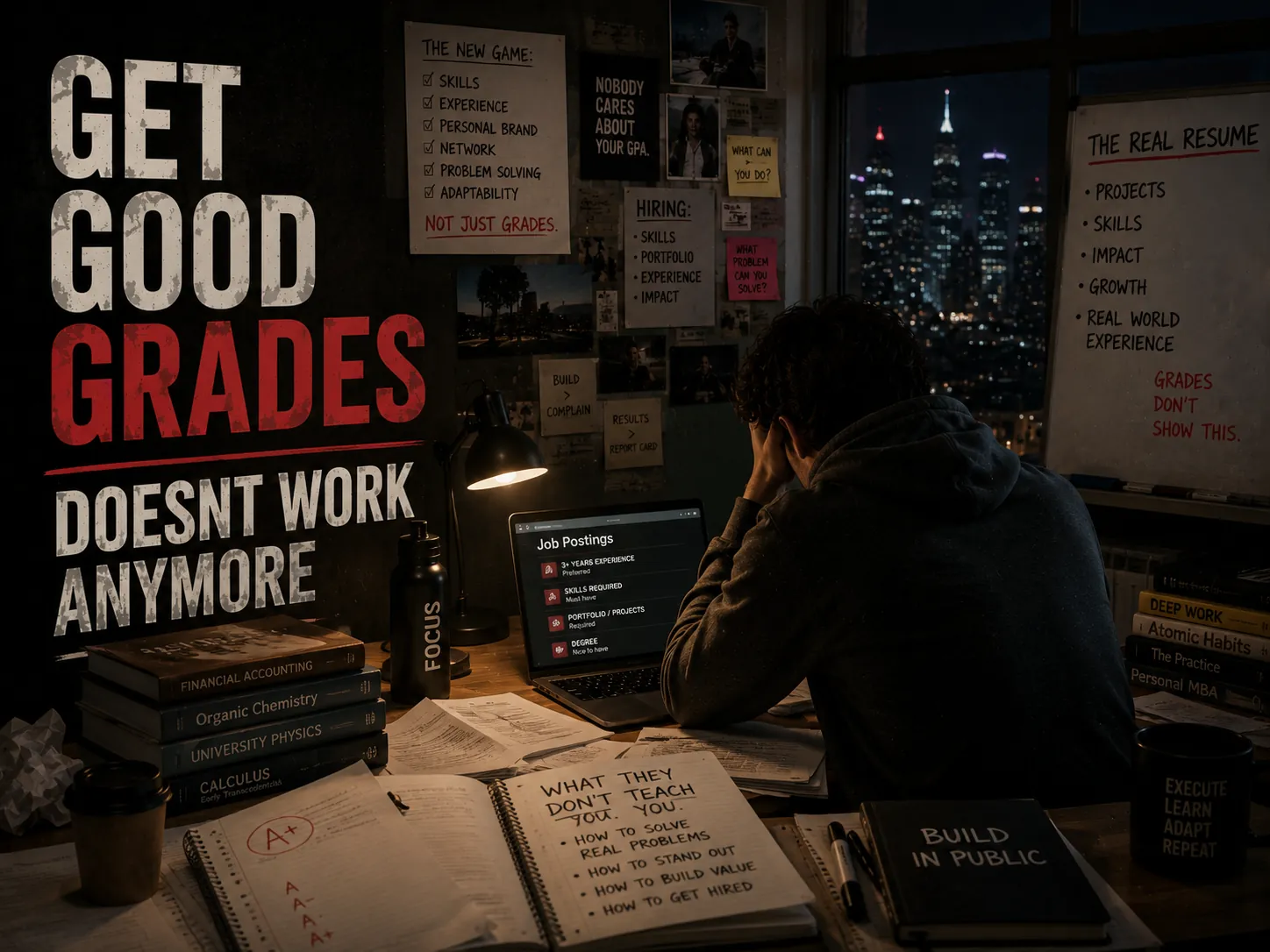
Get Good Grades Doesnt Work Anymore
Grades once signaled competence, but now proof-of-skill, projects, taste, communication, and applied judgment matter more.
A different path through the library.
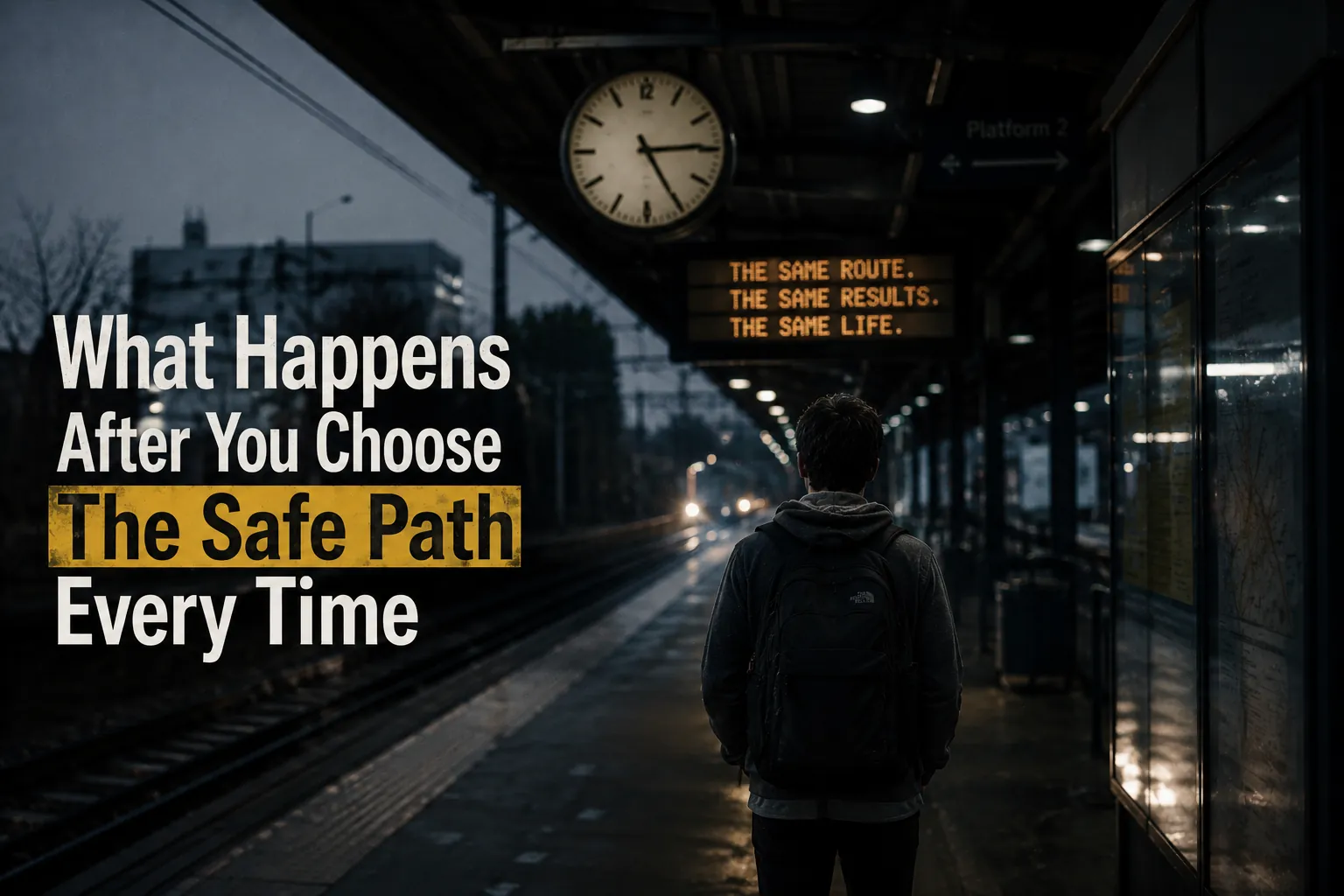
Safety feels mature until it becomes the quiet architecture of regret.
What Happens After You Choose The Safe Path Every Time
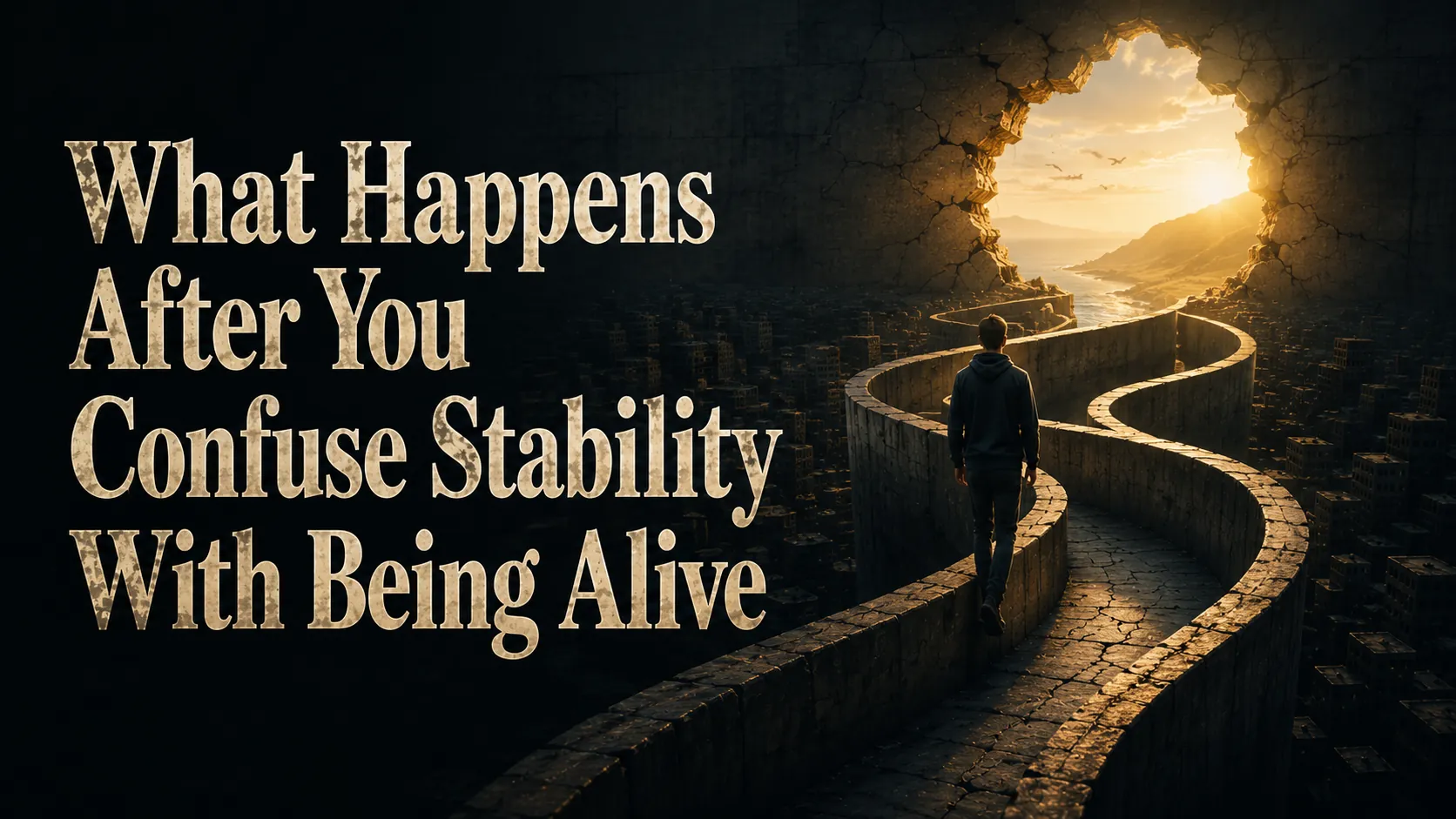
Stability feels responsible until your life becomes predictable in ways that slowly make you numb.
What Happens After You Confuse Stability With Being Alive

Chasing every tool makes you busy without making you clearer.