The grade illusion
"Get good grades" doesn't work anymore
Grades once signaled competence, but now proof-of-skill, projects, taste, communication, and applied judgment matter more.
By the end, you'll understand why the student who looks excellent on paper can still feel invisible in the real world.
You did what school trained you to do.
You showed up. Took notes. Turned things in. Studied for exams. Protected the GPA. Learned how to make the transcript look clean.
Then the real world asked a colder question.
What can you actually do when there is no answer key?
The hard shift
“Grades prove you can perform inside school. The market wants proof you can create value outside it.”
This is why the advice feels so painful.
"Get good grades" was never stupid advice.
It was incomplete advice pretending to be a full plan.
Good grades still help. They can protect scholarships. Open graduate school options. Pass filters for some internships. Show discipline. Signal that you can handle structure.
But grades cannot carry the whole story anymore.
A clean transcript says you survived a system.
It does not automatically prove you can solve a messy problem for a real person.
How grades lost power
More students learned the game
A high GPA became less rare in many rooms.
Assignments stayed hidden
Most schoolwork disappears into portals nobody outside class can inspect.
Work became easier to fake
AI, templates, group work, and polished language made surface quality less trustworthy.
Jobs became more ambiguous
Real work rarely arrives as a neat prompt with a rubric.
Employers started looking for proof
Projects, writing, portfolios, referrals, internships, and work samples reduce doubt faster than numbers alone.
THE SIGNAL SHIFT
Grades still matter, but the hiring signal is no longer as simple as one number at the top of a transcript.
Hiring screens
Fewer than half of employers now screen by GPA
You polish the number because school trained you to believe the number speaks first. Outside school, more employers are asking a different question: can you actually do the work?
How to read thisEach point is the share of employers who used GPA to screen college candidates that year.
Employer use of GPA as a screening tool for U.S. college hiring, 2017 to 2025.
NoticeGPA screening peaked at 73.3% in 2019. In 2025, even after a rebound, it was 46.4%.
A strong GPA can open a door, but it is weaker when it stands alone. You need proof that survives after the number disappears.
Behind the numbers
Source: NACE Job Outlook 2025, revised January 2025. Data collected Aug. 5-Sept. 16, 2024, with 237 employer respondents. Figures are percent of employers screening candidates by GPA: 2017 67.5%, 2018 70.1%, 2019 73.3%, 2020 63.0%, 2021 56.6%, 2022 46.3%, 2023 37.0%, 2024 38.3%, 2025 46.4%. NACE notes GPA use fell sharply from 2019 to 2023 and then increased over the past two years. ([Default][1]) Brief context:
Verify the data ↗Bottom line — Treat grades as the floor. The next layer is evidence someone can inspect, trust, and remember.
The transcript is still useful. It is just no longer enough to carry your whole story.
The deep problem is simple.
Grades are delayed judgment from school.
Real work is live judgment under uncertainty.
In school, the problem is usually selected for you. The deadline is given. The scope is limited. The grader knows the answer or has a rubric.
In work, the problem may be unclear. The data may be messy. The client may be confused. The tool may be wrong. The team may disagree. The first answer may sound good and still fail.
That gap breaks many excellent students.
The real world rewards the ability to find the problem, shape the work, and defend the judgment.
This is the part that hurts high achievers most.
School gives clear feedback.
92. A-minus. 3.8. Dean's list. Passed. Failed. Better. Worse.
The numbers make you feel located.
Then you enter the market and the feedback becomes fog.
No response. Rejected. Ghosted. "We went with another candidate." "You have a strong background." "We'll keep your résumé on file."
Suddenly, the person who knew how to win feels like they cannot even find the game board.
Try this
If your GPA disappeared tomorrow, what evidence would still prove you are useful?
This is where the old advice becomes dangerous.
It teaches students to treat school approval as the same thing as competence.
So they keep stacking proof that only works inside school.
More classes. Better grades. Another certificate. Another line on the résumé. Another safe achievement that looks good because someone else already defined the rules.
Then a recruiter, founder, manager, professor, client, or teammate asks to see what they can do.
The silence feels personal.
It is often structural.
The student built scores instead of evidence.
A résumé full of claims is weaker than one small project people can inspect.
THE PROOF LAYER
The market is not only asking what you studied. It is asking what you have already handled, built, led, or made visible.
What makes candidates stand out
Visible work changes how employers see you
Imagine two students with the same major and the same polished résumé. One has only claims. The other has work, projects, leadership, and a portfolio people can open.
How to read thisEach bar shows how many employers said that experience would make them much more likely to consider a candidate.
Employer reactions to college experiences that give hiring managers inspectable proof beyond grades.
Notice65% of employers said a portfolio of work would make them much more likely to consider a candidate.
Your project, case study, writing sample, GitHub repo, design, dashboard, or public breakdown can become the proof your GPA cannot show.
Behind the numbers
Source: AAC&U and Morning Consult, The Career-Ready Graduate, 2023. Online survey of 1,010 employers conducted in May 2023. Employers rated experiences on a 0-10 scale; "much more likely" aggregates scores of 8-10. Figures: job or work-study 71%, internship or apprenticeship 70%, leadership role 69%, working across backgrounds 65%, portfolio of work 65%, peer mentor/advisor 61%, significant writing courses 58%, senior project or capstone 58%, community project 57%, faculty research 56%, global issue project 53%. ([CloudFront][2])
Verify the data ↗Bottom line — The student who wins is not the one who only performed well in school. It is the one who turns learning into proof.
Reinforcing loop
The grade trap
You want certainty
Grades give clean numbers, so they feel safe.
You chase the number
Time goes into exams, rubrics, and polished submissions.
Your real skill stays hidden
The work sits inside class systems and never becomes public evidence.
The market ignores you
Employers cannot see enough proof to trust you.
You retreat into more school signals
Another grade feels safer than building something exposed.
feeds the start
Keep heading in that direction and the regret becomes quiet.
You may become the kind of student everyone praised.
Reliable. Smart. Organized. Respectful. Good at school.
Then you may meet someone with a lower GPA who can build the dashboard, explain the tradeoff, write the case study, ship the app, run the event, sell the idea, lead the team, or diagnose the messy human problem.
That moment can feel unfair.
It is also the moment the curtain opens.
The world was never grading only effort.
It was looking for usable proof.
The painful reveal
“School can make you feel ahead while the market quietly waits for evidence you never built.”
The new standard has 5 parts.
Skill. Project. Taste. Communication. Judgment.
Skill means you can do the thing.
Project means someone can see you did it.
Taste means you can tell strong work from weak work before someone tells you.
Communication means other people can understand your thinking.
Judgment means you can make a good call when the answer is unclear.
Grades touch some of this.
They do not replace it.
What matters after grades
Proof-of-skill
Show the thing, not only the claim that you know the thing.
Projects
Build artifacts that survive outside the classroom.
Taste
Study excellent work until average work starts bothering you.
Communication
Explain what you made, why it matters, and what you changed.
Applied judgment
Make decisions when there is no perfect instruction.
Relationships
Let people see your work and remember your seriousness.
Consistency
Build a visible pattern, not a one-week burst.
Taste may be the missing word.
Many students learn content.
Fewer learn taste.
Taste is the ability to look at a dashboard and know it is confusing. To read a report and know the argument is weak. To see a website and know the user will get lost. To hear an explanation and know it sounds smart but says little.
Taste is hard to grade.
That is why it becomes powerful.
Skill helps you make the work. Taste helps you know when the work is actually good.
Communication is the next separator.
Many capable students lose opportunities because their work stays trapped inside their own head.
They can solve, but cannot explain.
They can research, but cannot simplify.
They can build, but cannot tell another person why the work matters.
In school, unclear writing may lose points.
In work, unclear thinking loses trust.
The person who can explain clearly often beats the person who only knows quietly.
But what about…
The honest pushback
“Grades still matter.”
Yes. In some fields, they matter a lot. The claim is narrower: grades alone are weaker than grades plus visible proof.
“Medical school, law school, and graduate programs care about grades.”
Correct. Some paths still use grades heavily because they need formal sorting. Even there, recommendations, research, writing, interviews, experience, and judgment still matter.
“Some students have no time for extra projects.”
Then turn classwork into portfolio work. Improve one assignment until it can be shown. Use what you already have more intelligently.
“This is unfair to students without connections.”
It is unfair. Visible work can still help because it gives strangers something real to notice before they know you.
“A bad GPA can hurt you.”
Yes. Grades can close doors. The point is that good grades no longer open enough doors by themselves.
The AI shift makes this even sharper.
When a tool can write a decent paragraph, solve a starter problem, clean up a résumé, draft code, summarize research, or polish an answer, the surface of competence gets cheaper.
That does not make learning useless.
It makes shallow proof weaker.
The question becomes different.
Can you check the tool?
Can you ask a better question?
Can you notice the missing assumption?
Can you connect the answer to a real situation?
Can you tell when a polished output is quietly wrong?
When average output gets easier, applied judgment becomes harder to fake.
This is why the new path feels uncomfortable.
Grades let you hide inside preparation.
Projects expose you.
A project can be weak. A post can be ignored. A portfolio can reveal gaps. A case study can show that your thinking is not clear yet.
That exposure is exactly why it matters.
Trust grows where people can see you improve.
The new student stack
Keep the grades. Build the proof around them.
- 01Learn the foundationUse classes to get the language, theory, and discipline.
- 02Make one thing visibleTurn knowledge into a small artifact someone can inspect.
- 03Explain the artifactWrite what problem it solves, what choices you made, and what you learned.
- 04Ask for feedbackLet someone better than you find the weak points.
- 05Improve the workRevision is where competence becomes visible.
- 06Share it with the right peopleSend proof to people who understand its value.
- 07RepeatA pattern of finished work becomes a reputation.
The normal student can start small.
Take one assignment and make it useful to someone outside class.
A statistics project becomes a simple public dashboard.
A marketing paper becomes a teardown of a real brand.
A coding exercise becomes a tiny tool with a clean readme.
A psychology essay becomes a plain-language explainer.
A business class case becomes a one-page decision memo.
The same work changes shape.
Now it can travel.
What to build this semester
One proof project
Something small, finished, and connected to the role you want.
One written breakdown
Explain the problem, the process, the tradeoff, and the result.
One feedback source
A professor, older student, manager, alumni, or practitioner who will be honest.
One public home
A portfolio page, GitHub, Notion page, personal site, or clean PDF.
One relationship habit
Reach out with useful context, not panic.
One monthly improvement
Make the work sharper on a schedule.
The point is not to become a machine.
The point is to stop being trapped by a score.
You are more than a GPA.
But the world will not automatically discover that.
You have to make the rest of you visible.
Your curiosity. Your judgment. Your taste. Your ability to finish. Your ability to explain. Your ability to notice what other people miss.
A transcript cannot hold all of that.
The new rule
“Good grades make you credible. Visible work makes you real.”
Once you see this, school changes shape.
The exam is still important.
The grade still matters.
But the bigger question changes.
What can this class help me build?
What proof can come from this assignment?
What skill am I actually practicing?
Who could use this if I made it clearer?
What would make this work strong enough for a stranger to trust?
Those questions turn school from a scoring system into a launchpad.
The grade-first student versus the proof-building student
Grade-first student
- Protects the number above everything.
- Finishes assignments that disappear.
- Waits for graduation to prove ability.
- Feels lost when the rubric disappears.
- Applies with claims.
Proof-building student
- Keeps grades strong while building evidence.
- Turns assignments into artifacts.
- Practices before the market asks.
- Learns to work without perfect instructions.
- Applies with proof.
The final truth is hard, but clean.
Grades are a signal.
They are not the whole signal.
They tell the world something about your discipline, memory, consistency, and ability to operate in school.
The world still needs to know whether you can think through real problems, create useful work, communicate clearly, handle ambiguity, and make decisions that hold up after the classroom ends.
That part has to be built.
That part has to be shown.
The future belongs to students who treat grades as the floor, not the proof of the whole person.
So get good grades if you can.
Then refuse to stop there.
Build the thing.
Explain the thing.
Improve the thing.
Show the thing to people who care.
Let the grade say you learned.
Let the work prove you can use it.
A grade can tell people you passed. A body of work can make them believe you are ready.
Sources
Sources
Research-backed starting points on recent graduate labor markets, employer skill demand, skill-based hiring, and why grades alone are a weaker career signal.
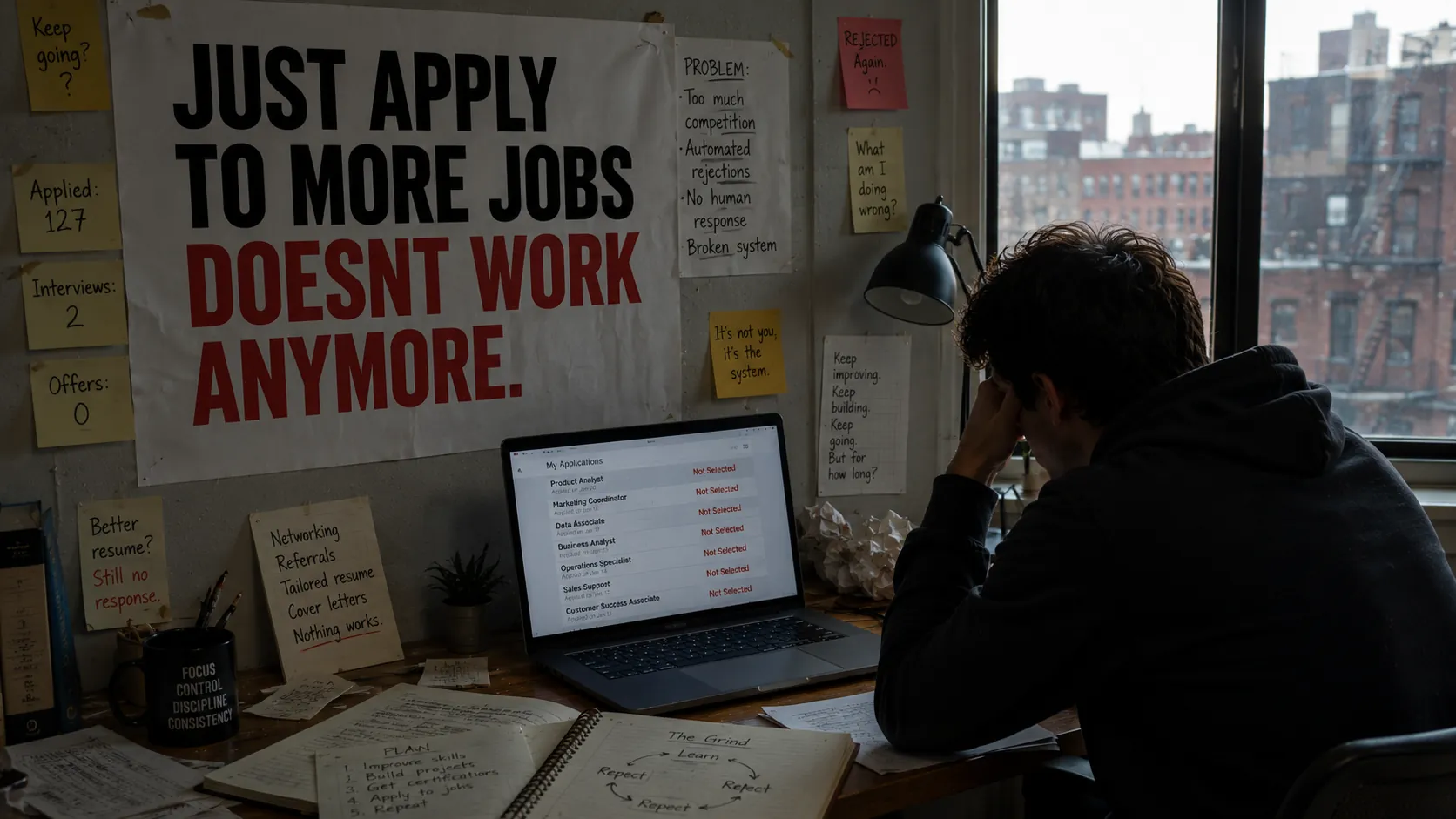
Just Apply To More Jobs Doesnt Work Anymore
Mass applying worked better when filters were weaker, but now proof, referrals, positioning, and targeted signal matter more.
A different path through the library.

Fake reviews exist because online trust became a scoreboard, and once ratings moved money, businesses learned to buy belief.
The Market for Fake Reviews
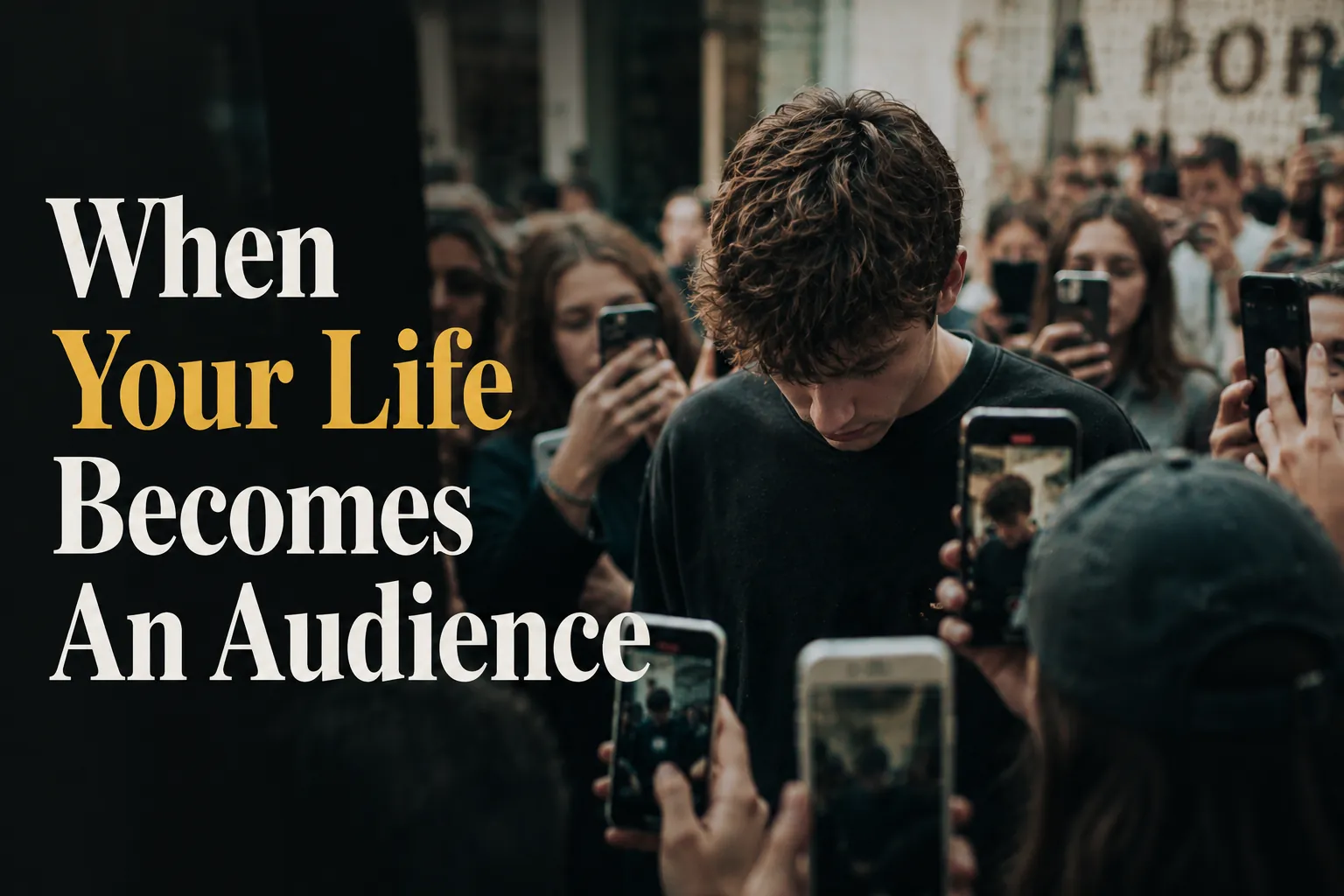
Public approval feels like proof until your private choices start needing invisible spectators.
When Your Life Becomes An Audience

You feel less late when you choose one useful skill and build proof.