The line AI cannot cross
Humans still own responsibility
Responsibility begins where the tool stops being accountable.
By the end, you'll see why the future does not belong to people who blindly use AI, but to people who can own what AI produces.
The tool can write the email.
The tool can draft the report. Summarize the meeting. Generate the code. Rank the candidates. Flag the risk. Suggest the diagnosis. Build the slide. Answer the customer. Produce the paragraph that sounds finished before anyone has checked whether it is true.
Then the output enters the world.
Someone reads it. Acts on it. Pays for it. Gets rejected by it. Gets harmed by it. Trusts it.
That is where the tool disappears.
And the human remains.
The hard boundary
“A tool can produce an answer. It cannot carry the weight of what happens after someone believes it.”
This is the mistake at the center of the AI age.
People treat output like responsibility.
If the tool produced it, the tool must somehow own it. If the model suggested it, the model must somehow answer for it. If the system ranked it, the system must somehow be blamed when the ranking shapes a person's life.
But tools do not stand in front of consequences.
People do.
The company that ships the system. The manager who signs off. The student who submits the answer. The doctor who relies on a summary. The recruiter who trusts a score. The creator who posts the claim. The builder who deploys the feature.
Responsibility returns to the human hand that lets the output move.
The moment an AI output affects another person, it stops being a toy and becomes a decision you must own.
Where responsibility appears
The tool produces
It predicts, drafts, ranks, summarizes, recommends, or automates.
A human accepts
Someone decides the output is good enough to use.
The output moves
It reaches a customer, patient, student, reader, user, worker, or audience.
A consequence follows
Someone trusts it, changes behavior, loses access, feels harmed, or makes a choice.
Accountability returns
The tool cannot explain itself, apologize, repair trust, face discipline, or carry moral blame.
The logic is simple.
Responsibility requires a self.
A self can understand stakes, answer questions, feel obligation, repair harm, accept blame, change behavior, and be held to a standard.
A tool can do none of that.
It can generate language about responsibility.
It cannot be responsible.
It can produce an apology.
It cannot be sorry.
It can produce a recommendation.
It cannot live with the person damaged by that recommendation.
A machine can imitate the language of care without carrying the burden of care.
This matters because AI makes irresponsibility easier to hide.
A person can now say, "The tool said it."
The sentence sounds modern.
It is just an old escape wearing new clothes.
People have always tried to push blame into systems. The policy said it. The spreadsheet said it. The algorithm said it. The process said it. The market said it.
AI makes that escape more tempting because the output looks intelligent.
But intelligence-shaped output does not erase human duty.
The excuse exposed
“"AI told me" is not a defense. It is a confession that you outsourced judgment when judgment was required.”
The layers of responsibility
Responsibility is not one thing. It appears at every layer.
- 01InputWhat did you ask, include, exclude, simplify, or hide?
- 02ContextDid you understand the real person, risk, history, and stakes?
- 03VerificationDid you check whether the output was true, fair, safe, and relevant?
- 04DecisionDid you choose to use it, edit it, reject it, or escalate it?
- 05ConsequenceWho might be affected after the output leaves your screen?
- 06RepairIf harm happens, who will explain, fix, compensate, or change the system?
Try this
If the output hurt someone, could you explain why you trusted it?
The dangerous part is that AI often fails politely.
It can be wrong in a confident voice.
It can miss the context while sounding organized.
It can flatten a human situation into a clean answer.
It can produce a summary that omits the one detail that mattered.
It can write code that works in the demo and breaks under real pressure.
It can make a biased process look neutral because the bias now arrives with formatting.
The output may look calm.
The consequence may not be.
Reinforcing loop
The irresponsibility loop
The tool sounds confident
The output looks polished, complete, and fast.
The human checks less
Fluency creates trust before proof.
The output moves into the world
It becomes a message, decision, report, product, or policy.
A problem appears
The answer was incomplete, biased, false, unsafe, or poorly matched.
Blame gets pushed back to the tool
The human learns the wrong lesson and checks even less next time.
feeds the start
This loop is how organizations become careless while believing they are becoming efficient.
They automate the first draft.
Then the review gets thinner.
Then the human becomes a rubber stamp.
Then the rubber stamp becomes a legal fiction.
"A human was in the loop."
But a human in the loop is not enough if the human is tired, rushed, untrained, afraid to disagree, or expected to approve whatever the system produces.
Presence is not oversight.
A human in the loop only matters if the human has the power, skill, and time to say no.
This is where responsibility becomes practical.
Before AI output touches the world, someone has to ask the ugly questions.
What would happen if this is wrong?
Who is least able to challenge it?
What context is missing?
What evidence supports it?
What would a skeptical expert notice?
What would the affected person say if they could see how this decision was made?
Those questions slow things down.
Good.
Some speed is just harm arriving earlier.
Speed without ownership is how small errors become large injuries.
But what about…
The honest pushback
“Humans make mistakes too.”
Yes. That is exactly why responsibility matters. A human can be questioned, trained, disciplined, corrected, sued, forgiven, or trusted again after repair. A tool cannot carry that moral relationship.
“AI can be more accurate than people in some tasks.”
Sometimes. Accuracy does not remove accountability. A better tool still needs a responsible user, especially when the stakes are human.
“The company built the system, so the user is not responsible.”
Responsibility can be shared. Builders, deployers, managers, users, and institutions may all own different parts of the harm.
“If we require humans to check everything, AI becomes slower.”
Correct. The level of checking should match the stakes. Low-risk drafting needs less review. High-risk decisions need more.
“People cannot understand every model.”
They still must understand enough about the use case, limits, evidence, and failure modes before trusting the output.
The normal person needs this too.
This is not only about hospitals, courts, banks, or companies.
It is in your daily life.
AI writes a message to someone you love.
You send it, and the relationship feels colder because the words were polished but not honest.
AI gives you a fact.
You repeat it, and now someone trusts something you never checked.
AI rewrites your essay.
You submit it, and the grade may be yours, but so is the hollow feeling that your thinking never showed up.
AI tells you how to respond to conflict.
You follow it, and the person across from you meets a template instead of you.
The personal line
“The tool can help you speak, but it cannot be the one who means it.”
Where people quietly surrender responsibility
Facts
Repeating a claim because it sounded clean.
Writing
Submitting words you cannot defend.
Relationships
Sending empathy you did not actually feel or understand.
Work
Approving output because checking it would take longer.
Hiring
Trusting a ranking without asking what it measured.
Learning
Letting the tool finish before your own mind struggles.
Leadership
Using AI as cover for decisions people were afraid to own.
The deepest danger is moral laziness.
AI can make a person feel productive without making them careful.
It can make them feel informed without making them wise.
It can make them sound compassionate without making them present.
It can make them appear decisive without making them accountable.
That gap is where trust dies.
People do not only need output.
They need someone to stand behind it.
Trust is not built by answers alone. Trust is built when someone is willing to own the answer.
The future will divide people less by who uses AI and more by how they use it.
Some will use it as a shield.
The tool said it. The system ranked it. The model wrote it. The dashboard suggested it.
Others will use it as an instrument.
I used the tool. I checked the output. I understand the limits. I made the decision. I can explain the reasoning. I will fix the damage if I was wrong.
That difference is everything.
Tool user versus responsible operator
Tool user
- Accepts fluent output too quickly.
- Hides behind the system.
- Checks only when forced.
- Treats speed as proof of progress.
- Blames the tool when harm appears.
Responsible operator
- Starts with the stakes.
- Checks based on risk.
- Understands the limits.
- Keeps a human decision point.
- Owns the outcome after use.
Responsible AI use begins before the prompt.
It begins with deciding whether AI belongs in the task at all.
Some tasks are fine for automation.
Drafting a low-stakes outline. Sorting notes. Summarizing a document you will still read. Brainstorming options. Finding patterns in non-sensitive data.
Other tasks deserve friction.
Medical choices. Legal decisions. Hiring outcomes. Financial advice. Grief. Conflict. Consent. Discipline. Anything where a wrong answer can change a person's life.
The tool may still help.
But help is not authority.
The responsible AI checklist
Use this before the output leaves your screen.
- 01StakesWhat happens if this is wrong?
- 02SourceWhere did the information come from?
- 03FitDoes the answer match the real context?
- 04BiasWho could be treated unfairly?
- 05VerificationWhat independent check would catch a bad answer?
- 06OwnershipWho is willing to stand behind the final decision?
- 07RepairWhat will happen if harm appears later?
This checklist does not make you slower forever.
It makes you safer where safety matters.
A grocery list does not need the same review as a medical note.
A joke draft does not need the same review as a termination letter.
A study summary does not need the same review as a legal filing.
Responsibility is not paranoia.
It is matching the level of care to the level of consequence.
The higher the stakes, the less acceptable it is to treat AI output as "probably fine."
The best AI users will look almost old-fashioned.
They will read carefully.
They will ask for sources.
They will compare outputs.
They will know when to call a human expert.
They will admit uncertainty.
They will document decisions.
They will refuse to ship what they cannot defend.
They will use powerful tools without letting power dissolve accountability.
The new competence
“In the AI age, professionalism means knowing when the machine is useful and when your name must stop it.”
Once you see this, the phrase "AI did it" starts sounding different.
It may explain how the output was made.
It does not explain why it was trusted.
It does not explain why nobody checked.
It does not explain why the affected person had no appeal.
It does not explain why speed mattered more than care.
It does not explain why a human walked away from a decision that still needed one.
AI can explain the method. It cannot excuse the moral choice to use the result.
The final truth is simple.
Responsibility begins where the tool stops being accountable.
And the tool stops being accountable immediately.
It does not lose sleep.
It does not face the patient.
It does not call the rejected applicant.
It does not repair the relationship.
It does not stand before the customer, the judge, the reader, the student, the family, or the person harmed by a confident mistake.
Someone else does.
That someone is us.
The more powerful the tool becomes, the more important the human behind it becomes.
So use AI.
Use it well.
Let it speed up the dull parts. Let it widen your options. Let it help you draft, test, compare, summarize, simulate, and see patterns you might have missed.
Then return to the line.
Can I defend this?
Can I verify this?
Can I explain this to the person affected?
Can I repair it if it goes wrong?
If the answer is no, the work is not finished.
The tool has stopped.
Your responsibility has begun.
AI can make work faster. Only humans can make the final use worthy of trust.
Sources
Sources
Research-backed starting points on AI accountability, human oversight, risk management, and responsible AI use.

Humans Still Own Meaning
Meaning comes from human stories, values, timing, and stakes.
A different path through the library.
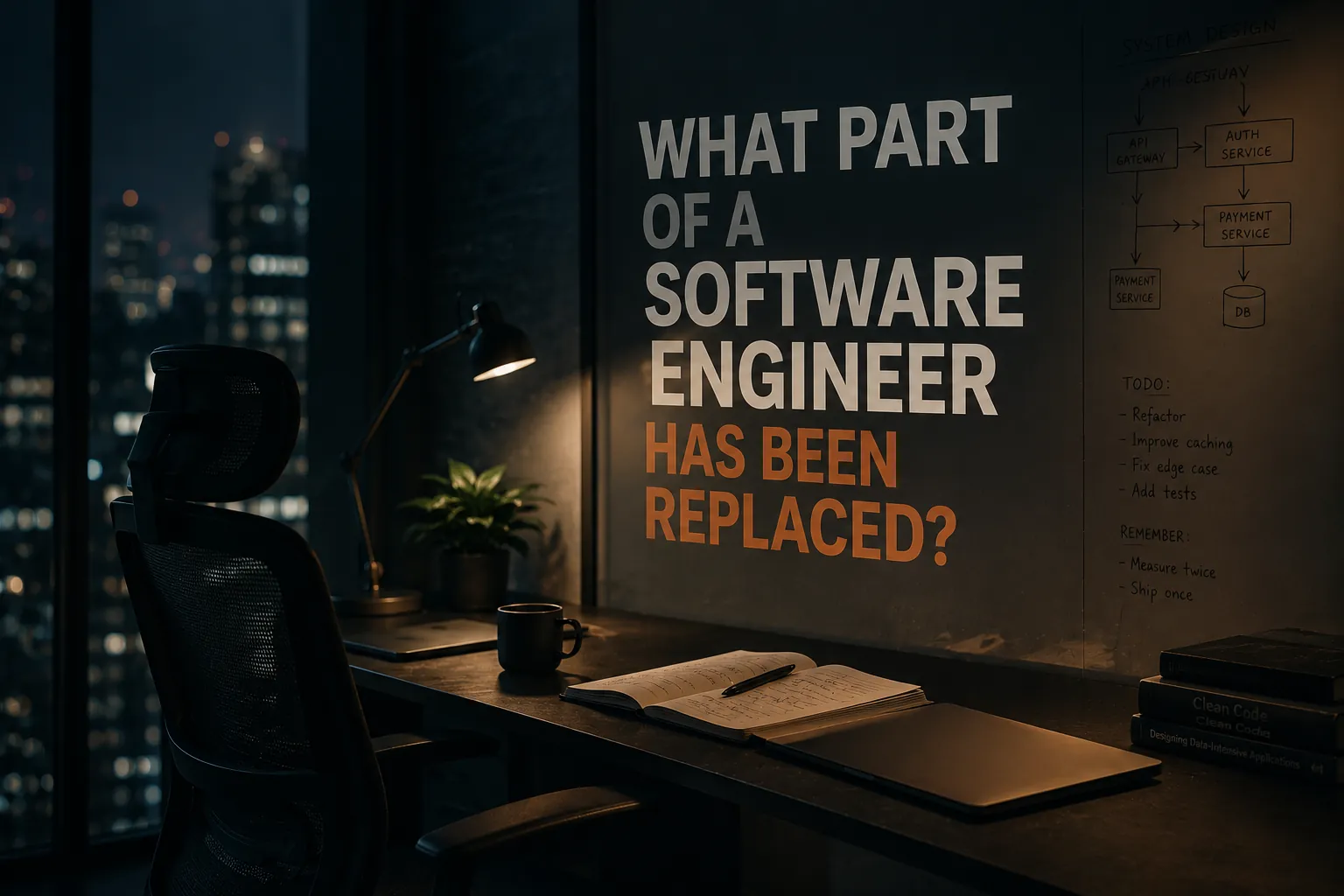
AI can speed up boilerplate, debugging, and simple implementation, but judgment, architecture, and ownership still matter.
What Part of a Software Engineer Has Been Replaced?
AI feels overwhelming because the ground keeps moving before people can adjust.
Why AI Makes Everyone Feel Behind
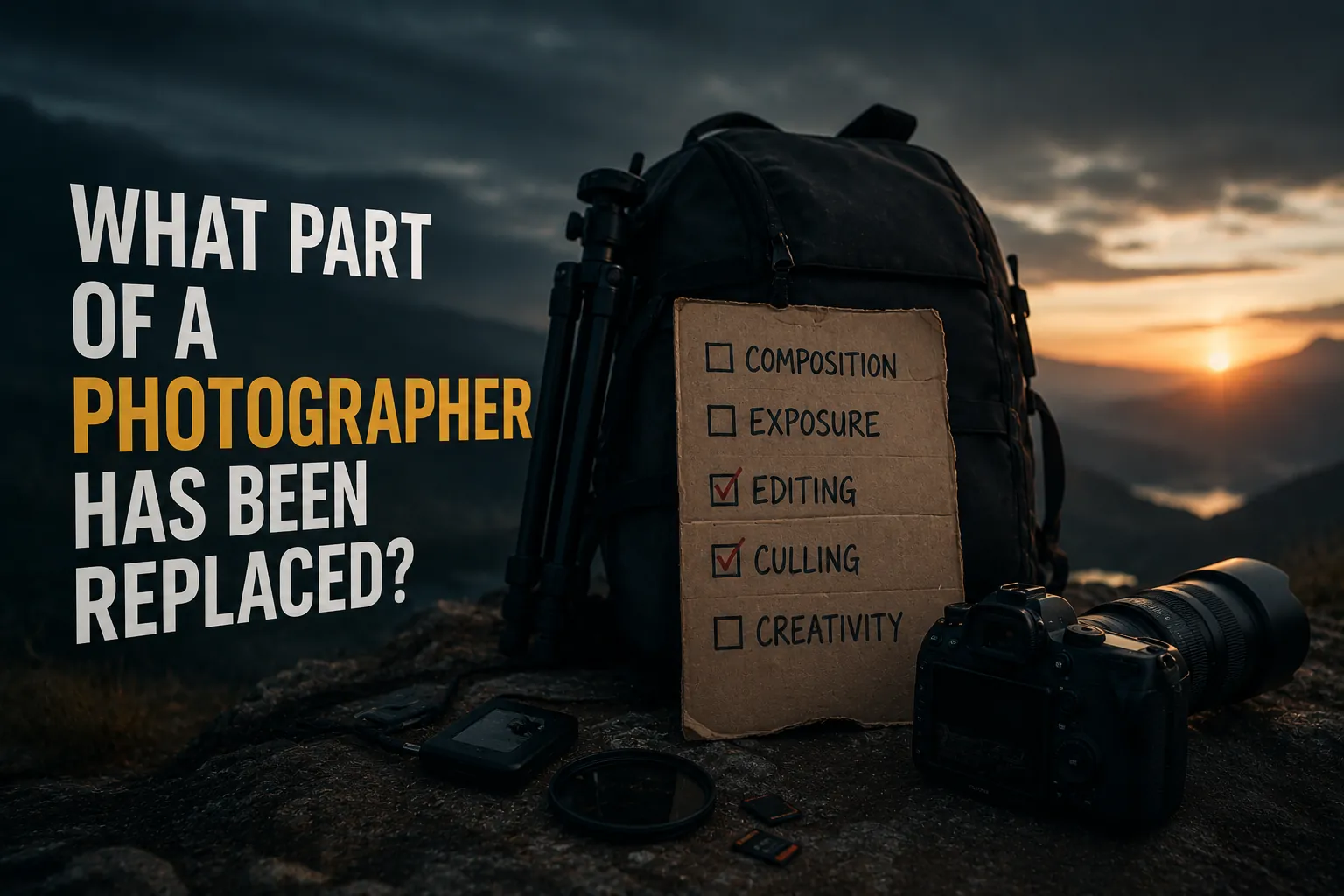
AI now generates images, retouches faces, and fixes lighting — but being there, capturing real moments, and authenticity still need a human.