The line beneath the output
Humans still own meaning
Meaning comes from human stories, values, timing, and stakes.
By the end, you'll see why AI can help produce language, but cannot decide what your life, work, grief, love, or choices mean.
The tool can summarize the meeting.
It can name the themes. It can turn a messy transcript into clean bullets. It can write the caption, draft the speech, analyze the comments, describe the trend, and produce a sentence that sounds like it understands.
But then someone asks the real question.
What does this mean?
That is where the machine starts running out of room.
The hard boundary
“AI can arrange words around an experience. It cannot decide what the experience is worth.”
Meaning is different from information.
Information says what happened.
Meaning says why it matters.
A tool can tell you that someone missed 3 meetings, sales dropped, a message sounded angry, a customer complained, a friend stopped replying, or a project failed.
Those facts matter.
But they are not the whole thing.
Maybe the missed meetings mean burnout. Maybe avoidance. Maybe grief. Maybe disrespect. Maybe bad timing. Maybe a system quietly breaking. Maybe one private story nobody has told yet.
The same fact can carry different meanings depending on the human life around it.
Meaning begins when facts enter a human story.
How meaning gets made
Something happens
A message, result, silence, loss, win, mistake, pattern, or change appears.
A human context surrounds it
History, relationship, culture, memory, pressure, fear, hope, and timing shape what it means.
Values enter the room
People decide what matters: fairness, loyalty, safety, beauty, truth, dignity, growth, care.
Stakes become visible
Someone may lose trust, gain courage, feel seen, get harmed, change direction, or understand themselves.
Meaning forms
The event becomes more than data. It becomes a human signal.
This is why AI can sound wise and still miss the point.
Wisdom is not only pattern recognition.
Wisdom knows what should be protected.
A model can say, "This message expresses disappointment."
A human may know it is actually the last attempt before someone gives up.
A model can say, "This career path has lower financial risk."
A human may know the person choosing it will disappear inside it.
A model can say, "The customer is frustrated."
A human may know the customer feels betrayed because the promise mattered.
The hidden danger is not that AI gives answers.
The danger is that clean answers can make messy meaning look unnecessary.
A polished summary can make a complex conflict feel solved.
A confident recommendation can make a moral tradeoff feel technical.
A neat category can make a person feel simpler than they are.
That is how meaning gets flattened.
The output looks clear.
The life underneath remains unresolved.
Clarity without human context can become a cleaner form of misunderstanding.
The layers AI cannot fully hold
Meaning lives in places output alone cannot reach.
- 01StoryWhat happened before this moment, and what does the person carry into it?
- 02TimingWhy does this matter now, not last month or next year?
- 03ValuesWhat must be protected even if efficiency points somewhere else?
- 04StakesWho can be hurt, changed, freed, betrayed, or strengthened by the decision?
- 05MemoryWhat will this become in the life of the person who lived it?
- 06IdentityWhat kind of person or organization are we becoming by choosing this?
Try this
When you ask AI what something means, are you seeking clarity, or trying to avoid choosing what you value?
Meaning has timing inside it.
The same sentence can be kind or cruel depending on when it arrives.
"I'm proud of you" can heal someone after years of doubt.
It can also feel empty if it comes after nobody showed up when it mattered.
"We need to talk" can be mature in one relationship and a threat in another.
"Move on" can be freedom after healing and violence before grief has had room.
AI can detect the sentence.
Humans understand the season.
Meaning depends on timing because humans do not receive words in a vacuum. They receive them inside a life.
This is where work changes too.
A dashboard can show churn.
But what does churn mean?
Customers are leaving.
Why?
Maybe the product broke trust. Maybe pricing changed. Maybe onboarding failed. Maybe users never understood the value. Maybe the wrong customers were sold the wrong promise.
The number points.
Meaning explains where to look.
Reinforcing loop
The danger of meaning without humans
The tool gives a clean answer
A summary, label, score, or recommendation appears.
The human stops too soon
The output feels finished because it is fluent.
Context gets skipped
History, values, stakes, and lived reality stay outside the answer.
A shallow decision follows
The action solves the surface and misses the human problem.
Trust weakens
People feel processed instead of understood.
feeds the start
This loop is everywhere.
A school uses a score and misses the student's story.
A company uses a dashboard and misses the customer's frustration.
A person uses a chatbot reply and misses their friend's pain.
A creator uses an AI caption and misses the reason the moment mattered.
A manager uses a summary and misses the silence in the room.
The machine did not fail at producing output.
The human failed to return to meaning.
The real failure
“The tragedy is not that AI gets the words wrong. It is that humans may stop asking what the words are for.”
But what about…
The honest pushback
“AI can help people find meaning.”
Yes. It can ask questions, organize thoughts, surface patterns, and offer language. The final meaning still depends on the person's values, memory, and lived stakes.
“Humans misunderstand meaning too.”
True. That is why meaning needs conversation, humility, time, and revision. Human error does not make a tool accountable for interpretation.
“Some data speaks for itself.”
Data can be strong, but decisions still require interpretation. What matters, what tradeoff is acceptable, and who bears the cost are human questions.
“AI can learn personal context.”
It can store details and infer patterns. It still does not live the consequences, carry the relationship, or become the person shaped by the choice.
“Sometimes meaning is obvious.”
Sometimes. The more human the stakes, the more dangerous it is to assume obviousness too quickly.
The normal person needs this line every day now.
You ask AI to write a birthday message.
It gives you something warm.
But only you know the joke from 3 years ago, the hospital room, the fight that almost ended the friendship, the tiny thing they did when nobody else noticed.
That is meaning.
You ask AI for career advice.
It gives options.
But only you know which path makes your chest tighten, which dream keeps returning, which risk is honest and which risk is old pain wearing ambition.
That is meaning.
Where humans still own meaning
Love
The right words depend on the history between two people.
Grief
Loss cannot be summarized into closure before the heart has caught up.
Work
The important metric is rarely the only thing that matters.
Creativity
The strongest idea often comes from a wound, obsession, memory, or question only you carry.
Leadership
People need to know what the choice says about who you are.
Learning
Facts matter more when they connect to a question the student actually feels.
Life direction
The best option on paper can still be wrong for the person living it.
This is why AI-generated writing can feel hollow even when the grammar is clean.
It may have structure.
It may have rhythm.
It may even have emotion-shaped language.
But meaning comes from pressure.
Something lived. Something risked. Something noticed. Something remembered. Something chosen when another option was easier.
Without that pressure, language can become beautiful furniture in an empty room.
Words become meaningful when they carry the weight of a life behind them.
The future will not punish people for using AI.
It will punish people who let AI replace their contact with meaning.
The person who wins will use the tool for speed, structure, options, critique, and translation.
Then they will return to the human questions.
What matters here?
Who is affected?
What story is underneath the surface?
What value is being protected or betrayed?
What would make this feel true, not merely polished?
AI can help you say something. It cannot decide what is worth saying.
Meaning also needs stakes.
A sentence means more when something can be lost.
An apology means more when pride has to bend.
A promise means more when keeping it costs something.
A career choice means more when it changes the shape of your days.
A piece of work means more when someone depends on it.
A tool can describe stakes.
Humans stand inside them.
The responsible meaning stack
Use this before trusting any clean answer too quickly.
- 01FactsWhat happened?
- 02ContextWhat surrounds it?
- 03PeopleWho is involved, and what do they carry?
- 04ValuesWhat matters most here?
- 05StakesWhat can be lost or protected?
- 06ChoiceWhat will we do because of this meaning?
- 07OwnershipCan we stand behind that choice later?
The meaning stack slows you down in the right places.
It keeps a conflict from becoming "negative sentiment."
It keeps a student from becoming "low performance."
It keeps a customer from becoming "churn risk."
It keeps a friend from becoming "unresponsive."
It keeps a life from becoming "career optimization."
Labels are useful.
They become dangerous when they make people smaller than their story.
The warning
“The more fluent the label, the easier it is to forget the person inside it.”
The way forward is partnership with a boundary.
Let AI help with language.
Let it challenge your first thought.
Let it organize the mess.
Let it offer possibilities you may have missed.
Then take the meaning back.
Bring in the story. Bring in the values. Bring in the timing. Bring in the stakes. Bring in the person who has to live with the choice.
The tool can support interpretation.
It cannot be the soul of it.
Tool-led meaning versus human-owned meaning
Tool-led meaning
- Starts with the generated answer.
- Trusts fluency too quickly.
- Treats context as optional.
- Turns people into labels.
- Avoids the burden of choosing values.
Human-owned meaning
- Starts with the human situation.
- Uses AI as a thinking aid.
- Checks context, timing, and stakes.
- Keeps the person larger than the category.
- Chooses and owns what matters.
The final truth is simple.
AI can process the symbol.
Humans live the significance.
A wedding photo is pixels to a model and a life marker to a family.
A hospital note is text to a system and fear to a patient.
A resignation email is language to a tool and a turning point to a worker.
A quiet message from a friend is data to be interpreted and a relationship asking to be handled with care.
Meaning lives where consequence touches memory.
The tool can help name the moment, but humans decide why the moment matters.
So use AI.
Ask it to summarize, compare, draft, question, translate, and sharpen.
Then do the part only a human can do.
Remember.
Care.
Choose.
Own the value beneath the choice.
Because the future will be full of generated language.
The rare thing will be language that actually means something.
Humans still own meaning because meaning is not found in the output. It is found in the life the output touches.
Sources
Sources
Research-backed starting points on meaning-making, human values, sensemaking, AI interpretation, and why context matters in human decisions.
That's the last episode.
You've finished What Still Needs a Human?.
A different path through the library.
AI feels overwhelming because the ground keeps moving before people can adjust.
Why AI Makes Everyone Feel Behind
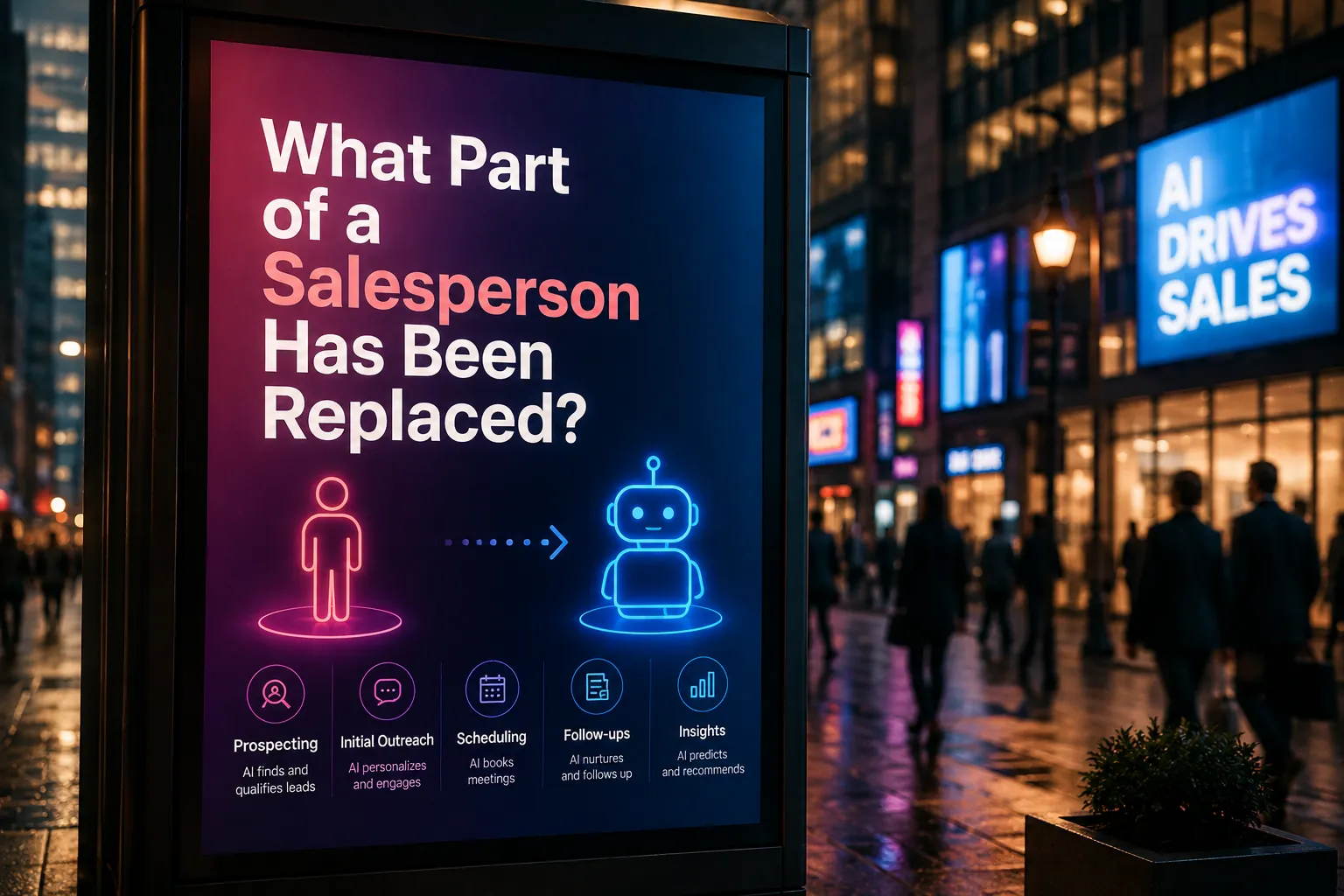
AI now scores leads, drafts outreach, and logs CRM notes — but trust, reading the room, negotiation, and closing complex deals still need a human.
What Part of a Salesperson Has Been Replaced?
AI can generate campaigns and copy fast, but positioning, taste, customer insight, and brand trust still decide outcomes.