What Part of a Data Analyst Has Been Replaced?
AI can now write SQL, clean messy data, build charts, and summarize results very fast. But it has not replaced asking the right question, judging if the data is trustworthy, reading meaning in context, or being the person held responsible for the decision.
Bottom line — AI replaced a lot of the query-and-chart work. It has not replaced the judgment behind the numbers.
The simple answer
A data analyst is not just someone who runs queries.
A data analyst decides what question is worth asking.
A data analyst checks if the data can even be trusted.
A data analyst explains what the numbers mean for a real decision.
AI can produce a query, a clean table, and a chart in seconds.
But AI does not know your business, your customer, or whether the data is wrong.
Bottom line — AI can make the chart. Humans still decide if the chart should be believed.
Main idea
AI has replaced the fast, repeatable part of analysis. It has not replaced the part where someone is trusted with the decision.
The data analyst job, broken into simple parts
Columns
| Part of the job | Can AI do it? | How well? | Human still needed? | Simple example | Real answer |
|---|---|---|---|---|---|
| Write SQL queries | Yes | Very well | Yes, to check it | Turn a question into a query that pulls the right rows | Mostly replaced |
| Clean messy data | Yes | Well | Yes, for edge cases | Fix dates, remove duplicates, fill blanks | Mostly replaced |
| Build charts | Yes | Very well | Sometimes | Turn a table into a bar chart or trend line | Mostly replaced |
| Summarize results | Yes | Well | Yes, for accuracy | Write a short recap of what a dashboard shows | Mostly replaced |
| Make a dashboard | Somewhat | Medium | Yes | Lay out the right metrics for a team | Partly replaced |
| Ask the right question | Barely | Weak | Yes, strongly | Know that "why did sales drop?" is the wrong question this week | Not replaced |
| Judge data quality | Somewhat | Medium | Yes, strongly | Notice that a number tripled because tracking broke, not because sales grew | Not replaced |
| Interpret meaning in context | Barely | Weak | Yes | Know the spike is from a holiday, not the new feature | Not replaced |
| Be trusted with the decision | No | Cannot | Yes | Who answers if the report sends the company the wrong way? | Not replaced |
The easiest way to understand it
AI can give you a confident answer to almost any question.
That does not mean the answer is true.
A clean query can still run on broken data.
A correct chart can still tell a misleading story.
A fast summary can still miss the one thing that mattered.
Bottom line — AI can produce numbers. Humans decide if the numbers deserve trust.
What moved to AI, step by step
Question to query
You type a plain-English question. Tools like ChatGPT and the AI features in BigQuery and Snowflake turn it into SQL.
Query to clean table
AI fixes formats, flags duplicates, and reshapes the data so it is ready to use.
Table to chart
AI picks a chart type and builds it. Many BI tools now do this from a prompt.
Chart to summary
AI writes a short recap of what the chart appears to show.
Summary to decision
Here the chain stops. A human still has to decide if it is right and act on it.
Bottom line — AI now carries the work from question to summary. The decision at the end stayed human.
old analyst work vs AI-era analyst work
Before AI
- Hand-write every query from scratch.
- Spend hours cleaning a spreadsheet.
- Build each chart manually.
- Write the recap line by line.
- Wait days for a simple pull.
With AI
- AI drafts the query in seconds.
- AI cleans most of the data automatically.
- AI builds charts from a prompt.
- AI writes a first-draft summary.
- Human checks the data, frames the question, and owns the call.
Bottom line — The job moved from producing the numbers by hand to questioning, verifying, and explaining them.
What stays human (and what to get good at)
Ask the right question
AI answers what you ask. Knowing what to ask is still the hardest, most valuable skill.
Judge whether the data is trustworthy
AI assumes the data is fine. You have to know when tracking broke, a join doubled the rows, or a filter is wrong.
Read meaning in context
A number only means something next to what was happening in the business that week.
Say what the data does NOT show
Knowing the limits of an answer is often more useful than the answer.
Translate numbers into a decision
The point of analysis is action, not a chart. Connect the result to what the team should do.
Be the person held responsible
Someone has to stand behind the report. AI cannot be accountable.
Important distinction
AI can make a wrong answer look clean, confident, and well-formatted. Catching that the answer is wrong is the human job.
But what about…
But isn't the job just gone?
“If AI writes the SQL and the charts, why hire an analyst at all?”
Because someone still has to know what to ask, check that the data is real, and explain what it means. AI does the production. The judgment is the job.
“AI can answer questions in plain English now, so anyone can do analysis.”
Anyone can get an answer. Knowing whether the answer is trustworthy, and what it actually implies, is what separates a number from a decision.
“Won't AI just keep getting better until it covers everything?”
It will get better at production. But it does not know your business, cannot be held accountable, and cannot decide what matters. Those are not speed problems AI fixes by scaling.
What the job becomes
The old job was: produce the numbers.
The new job is: decide which question matters, use AI to produce the numbers, check that the data is real, read what it means in context, and tell the team what to do about it.
The analyst moves from typing queries to guarding the truth of what gets reported.
Bottom line — The analyst becomes the question-framer, the data-quality check, and the person who turns numbers into a decision.
Final definition
AI has replaced much of the analysis production. It has not replaced the human ability to ask the right question, judge the data, and be trusted with the decision.
Sources
Sources
Real, verifiable links for AI that writes SQL, cleans data, builds charts, and summarizes results inside the tools analysts actually use.
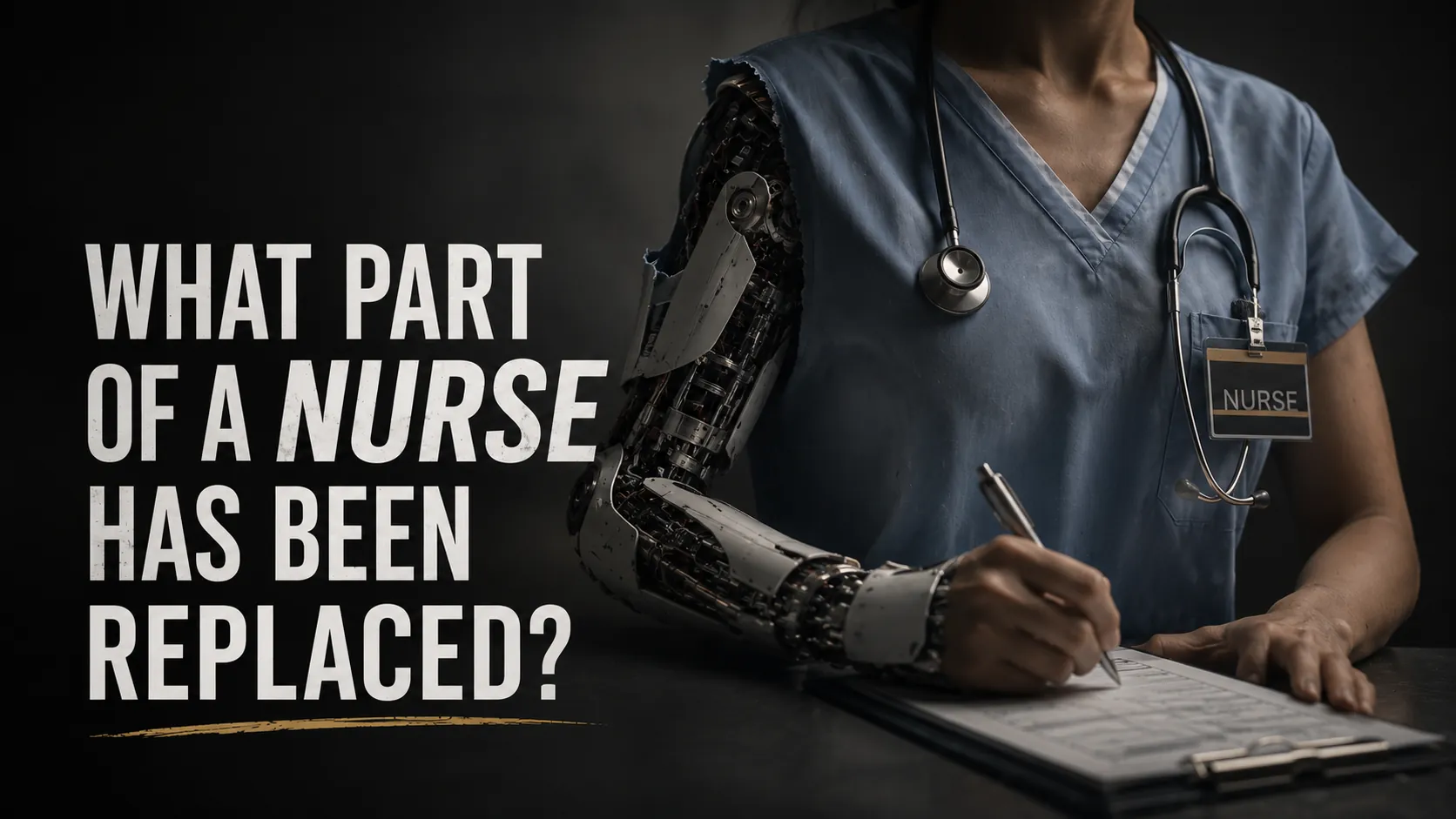
What Part of a Nurse Has Been Replaced?
AI now writes nursing notes, runs triage chatbots, and monitors vitals — but hands-on care, bedside judgment, and patient trust still need a human.