The quiet numbness
What happens after you confuse stability with being alive
Stability feels responsible until your life becomes predictable in ways that slowly make you numb.
By the end, you'll see the trade, the pattern, and the road your life takes if you keep calling numbness peace.
At first, it looks like maturity.
You stop taking risks. You keep the job. You stay in the apartment. You repeat the routine. You become the person who can be counted on.
Nothing is falling apart.
That's what makes it hard to notice.
Your life doesn't collapse. It slowly goes quiet.
The mystery begins with a strange detail.
You did what you were supposed to do, and somehow the reward feels thin.
You have fewer emergencies. Fewer unknowns. Fewer nights where your chest tightens because the future is blurry.
So why does your day feel like a hallway with the same door repeating?
The answer is uncomfortable: you may have built a life that keeps you safe from pain, but also safe from intensity, wonder, surprise, hunger, and change.
How stability becomes numbness
You choose safety
After enough stress, peace starts to look like anything predictable.
You remove uncertainty
You avoid the choices that might disturb the life you worked to calm down.
You repeat what works
The same schedule, same people, same conversations, same version of yourself.
Your senses dull
The mind stops paying attention to a life it can already predict.
You call it peace
The absence of danger starts passing for the presence of aliveness.
Work and aliveness
The safe job is feeling less alive for millions
You answer the messages. You hit the deadlines. From the outside, it works. Inside, more workers are moving through the day without much energy for the work itself.
How to read thisEach point is the share of U.S. workers who feel involved in and excited by their work.
Share of U.S. employees who are engaged at work, annual averages, 2020 to 2025.
NoticeEngagement fell from 36% to 31%, equal to about 8 million fewer people feeling alive at work.
If your job looks stable but feels flat, you are not imagining a private failure; millions are doing the same quiet math.
Behind the numbers
Source: Gallup, 2026. Gallup defines engaged workers as people involved in and enthusiastic about their work and workplace. Annual U.S. employee engagement was 36% in 2020, 34% in 2021, 32% in 2022, 33% in 2023, 31% in 2024, and 31% in 2025. Gallup says each percentage point equals about 1.6 million full- or part-time U.S. employees. 2025 results use quarterly web surveys of 78,945 U.S. workers with a plus or minus 0.5 point margin of sampling error.
Verify the data ↗Bottom line — A stable role can still become a place where your energy slowly leaves the room.
The warning sign is not always collapse. Sometimes it is competence without feeling: you keep performing the life while becoming less present inside it.
This is the trick.
Numbness rarely announces itself as numbness.
It arrives dressed as being practical. Being realistic. Being grateful. Being low maintenance. Being done with chaos.
And some of that may be true.
Chaos can ruin a person. Instability can make the body feel hunted. There are seasons where predictable meals, predictable bills, and predictable mornings are the medicine.
Then the medicine becomes the room you never leave.
The same structure that once saved you can later start shrinking you.
The difference your body knows
Stability
- Your nervous system can rest.
- Your bills have a plan.
- Your days have shape.
- Your choices protect what matters.
Aliveness
- Your attention wakes up.
- Your courage has somewhere to go.
- Your curiosity touches real life.
- Your future has more than maintenance in it.
The cost hides in layers
The loss starts small because nothing dramatic happens.
- 01The calendarEvery week looks like a copied page from the week before.
- 02The bodyYou feel tired without being busy in a meaningful way.
- 03The voiceYou stop saying what you want because wanting creates disturbance.
- 04The identityYou become known for being steady, then feel trapped by the role.
- 05The soulYou can function for months without feeling fully here.
the quiet drift
The older a normal life gets, the easier it becomes for whole days to fill with solitude.
Time alone
Later life can mean eight waking hours alone each day
You imagine stability as a fuller house, deeper roots, a life held together. But the average day can quietly tilt the other way: more hours awake without another person in the room.
How to read thisEach bar is the average number of waking hours per day spent alone.
Average waking hours spent alone per day in the U.S., by age group, 2025.
NoticePeople 75 and older average 8.31 waking hours alone each day.
The risk is not just being alone; it is building routines so fixed that nobody can easily enter them.
Behind the numbers
Source: U.S. Bureau of Labor Statistics American Time Use Survey Table A-8, 2025 annual averages. The survey asks who was in the room with the person or who accompanied them during waking activities. Sleep is excluded. Figures shown are average waking hours alone per day: ages 15-19, 5.16; 25-34, 6.37; 45-54, 6.88; 65-74, 8.13; 75 and older, 8.31. Some activities have missing companion data, so alone plus with-others time does not always equal total waking time.
Verify the data ↗Bottom line — Stability needs doors in it, or the life that protects you can slowly become a life no one shares.
The curtain lifts when you see the real bargain.
You didn't choose stability only because it was wise.
You may have chosen it because the unknown once cost too much.
Maybe risk embarrassed you. Maybe a dream failed in public. Maybe love made you feel unsafe. Maybe money anxiety trained your body to worship control. Maybe your childhood taught you that peace meant nothing bad was happening.
So you made a private promise: never again.
Never again will I be caught off guard. Never again will I need too much. Never again will I chase something that can humiliate me. Never again will I want something so badly it can hurt me.
That promise protects you.
It also builds the cage.
Reinforcing loop
The path if you keep going
You choose the predictable thing
It feels safe because you already know the emotional cost.
Your life gets quieter
Fewer shocks, fewer sparks, fewer moments that ask for your full attention.
Your hunger feels inconvenient
Desire starts looking irresponsible because it threatens the routine.
You lower the volume again
You call the smaller life reasonable.
The cage gets cleaner
From the outside, it looks successful. From the inside, it feels airless.
feeds the start
Keep heading in that direction and your life won't look like a disaster.
That's the scary part.
It will look organized. People may even praise you for it. They'll say you seem grounded, consistent, settled.
But you'll know.
You'll know by the way weekends disappear without a memory attached to them. By the way you stop having stories. By the way your dreams become "maybe later" until later becomes a decade with better furniture.
You'll know by the quiet envy you feel around people who still want things out loud.
You'll know by the tiny grief that appears when someone asks, "What do you really want?" and your first answer is silence.
Try this
When did your life become something you manage instead of something you feel?
Stability becomes dangerous when it turns every real desire into a threat.
A new city becomes "too much right now."
A harder project becomes "probably unrealistic."
A deeper relationship becomes "complicated."
A creative pull becomes "not practical."
One by one, the doors stay closed.
After a while, you stop calling them doors.
But what about…
The honest pushback
“Stability matters.”
Yes. A life with no ground will exhaust you. The problem begins when the ground becomes a ceiling.
“I can't just blow up my life.”
You probably shouldn't. Aliveness usually returns through small, honest disturbances before major decisions.
“Maybe I'm just tired.”
Maybe. Rest first. Then watch what remains. If rest gives you energy but no desire, the issue runs deeper than sleep.
“Wanting more feels selfish.”
Wanting a life that feels real is not greed. It is a sign that some part of you still believes you are here for more than maintenance.
The way back is not chaos.
It is contact.
Contact with your real preferences. Contact with honest risk. Contact with people who make you feel awake instead of merely approved. Contact with work that asks more from you than endurance.
Start with one controlled break in the script.
Take a different route. Say the honest sentence. Apply for the thing. Make the call. Admit the desire. Spend 2 hours on the project that keeps following you around in the dark.
Small acts count because numbness feeds on sameness.
The path back to aliveness
Keep the ground. Change the air.
Protect the basics, then introduce one new source of challenge, beauty, or truth.
Follow the envy.
Envy often points to a buried desire wearing an ugly mask.
Track what gives you stories.
A living life creates moments you can actually remember.
Let your body vote.
Pay attention to where you feel heavier, lighter, tighter, more awake.
Choose one honest risk.
Pick something small enough to survive and real enough to matter.
Stop calling fear wisdom.
Some caution protects you. Some caution is old pain managing your future.
Aliveness returns when you stop using safety as an excuse to abandon the life still asking for you.
You do not need to become reckless.
You need to become reachable again.
Reachable by wonder. Reachable by desire. Reachable by surprise. Reachable by the future you keep dismissing because it would ask you to move.
The life ahead gets smaller when every choice is made to avoid disturbance.
It gets deeper when stability becomes the ground you stand on, not the wall you hide behind.
That is the solved mystery.
You were not bored because life had nothing left to give you.
You were bored because you trained yourself to stop reaching for what would make you feel alive.
A stable life can keep you alive. A brave life lets you feel that you are.
Sources
Sources
Research-backed starting points on autonomy, novelty, boredom, and why predictable comfort does not always create a meaningful life.
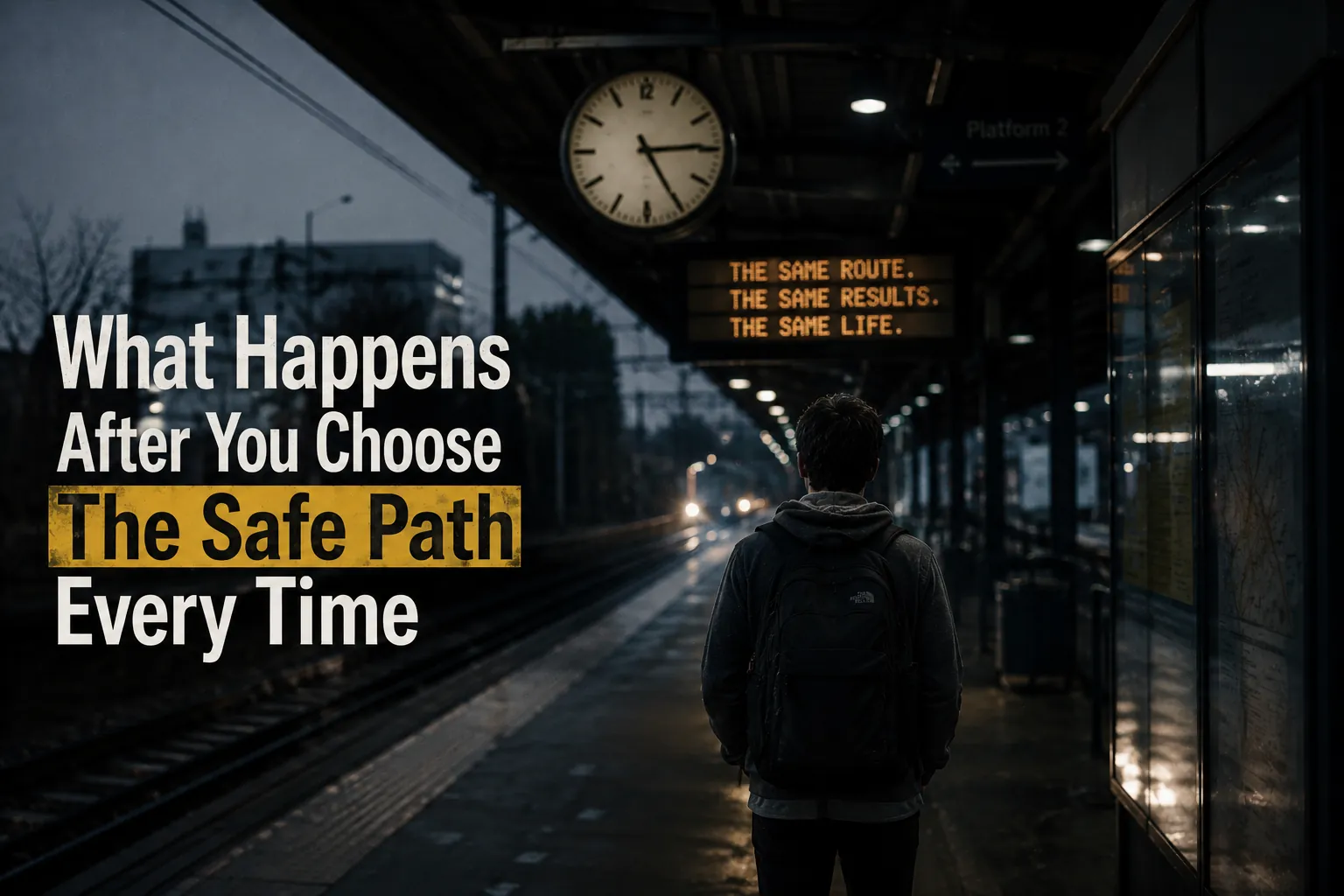
What Happens After You Choose The Safe Path Every Time
Safety feels mature until it becomes the quiet architecture of regret.
A different path through the library.
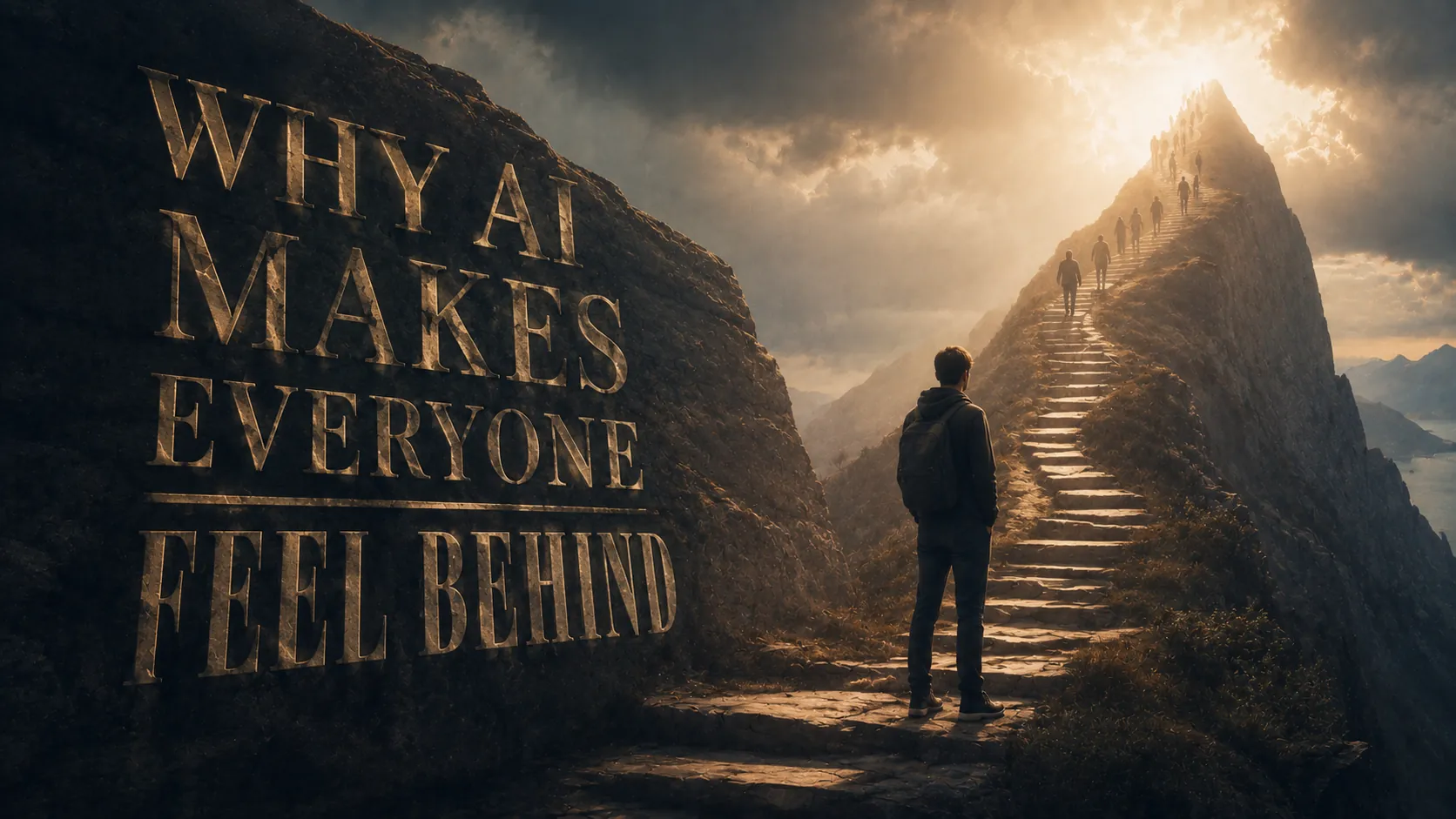
AI feels overwhelming because the ground keeps moving before people can adjust.
Why AI Makes Everyone Feel Behind
You feel less late when you choose one useful skill and build proof.
How to Stop Feeling Late
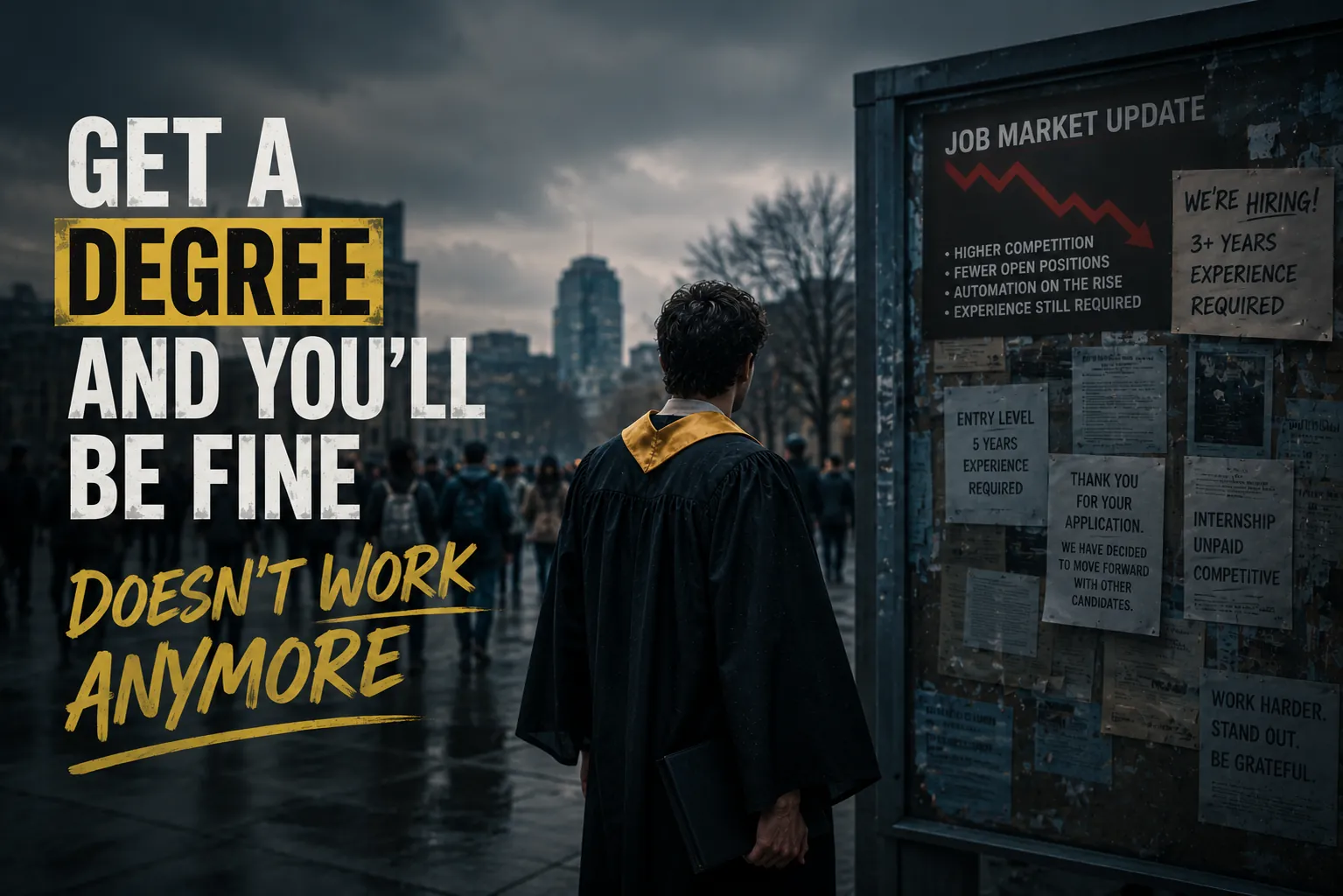
A degree helps, but it no longer replaces visible skills, projects, network, and judgment.